Vincenzo Daneu, born in Trieste in 1860, left his hometown at the age of 23 to move to Palermo. Within a few years, he started a craft and antiques business, with headquarters main office in Palazzo Santa Ninfa, on Corso Vittorio Emanuele, almost opposite the Cathedral.
Daneu had friendly and working relationships with Giuseppe Pitrè, Antonio Salinas, Vincenzo Florio, as well as with other Palermo antiquarians. Giuseppe Pitrè was the family physician of the six Daneu children, and his visits were frequent. Pitrè knew German, which was the mother tongue for Daneu.
Daneu was a crafts enthusiast: pleasant and enriching were the learned conversations between the doctor and the father of the family. From their exchanges arose in Daneu an interest in the Sicilian cart. He is the first to include its carved and painted pieces in the “country art” trade, which will become part of the cultured antiques circuit.
Vincenzo’s six sons all collaborated in the family business. Antonio Daneu, journalist, antiquarian and art critic, takes care of the anthropological and artistic aspect of Sicilian wagon decorations, as his many published articles on the subject attest. His daughter Ancka Daneu carries on her father’s store after his passing, with great expertise, culture and charisma until the ‘70s of the last century. Mario Tschinke son of Ancka Daneu and grandson of Antonio Daneu, inherits the pieces, the subject of the donation by Vincenzo and Anna Tschinke, Mario’s children. Many of the pieces that are the subject of the donation have been displayed in various exhibitions and several times described in publications.
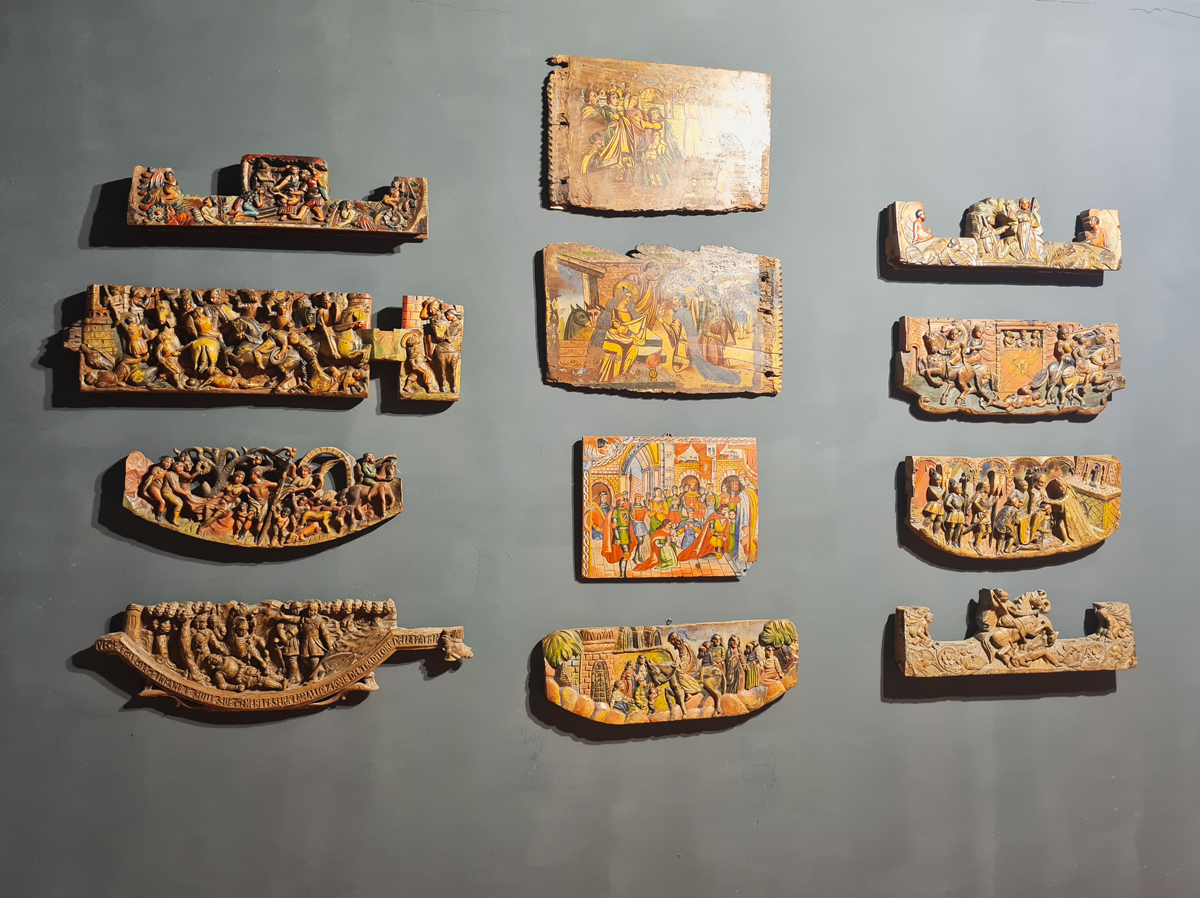
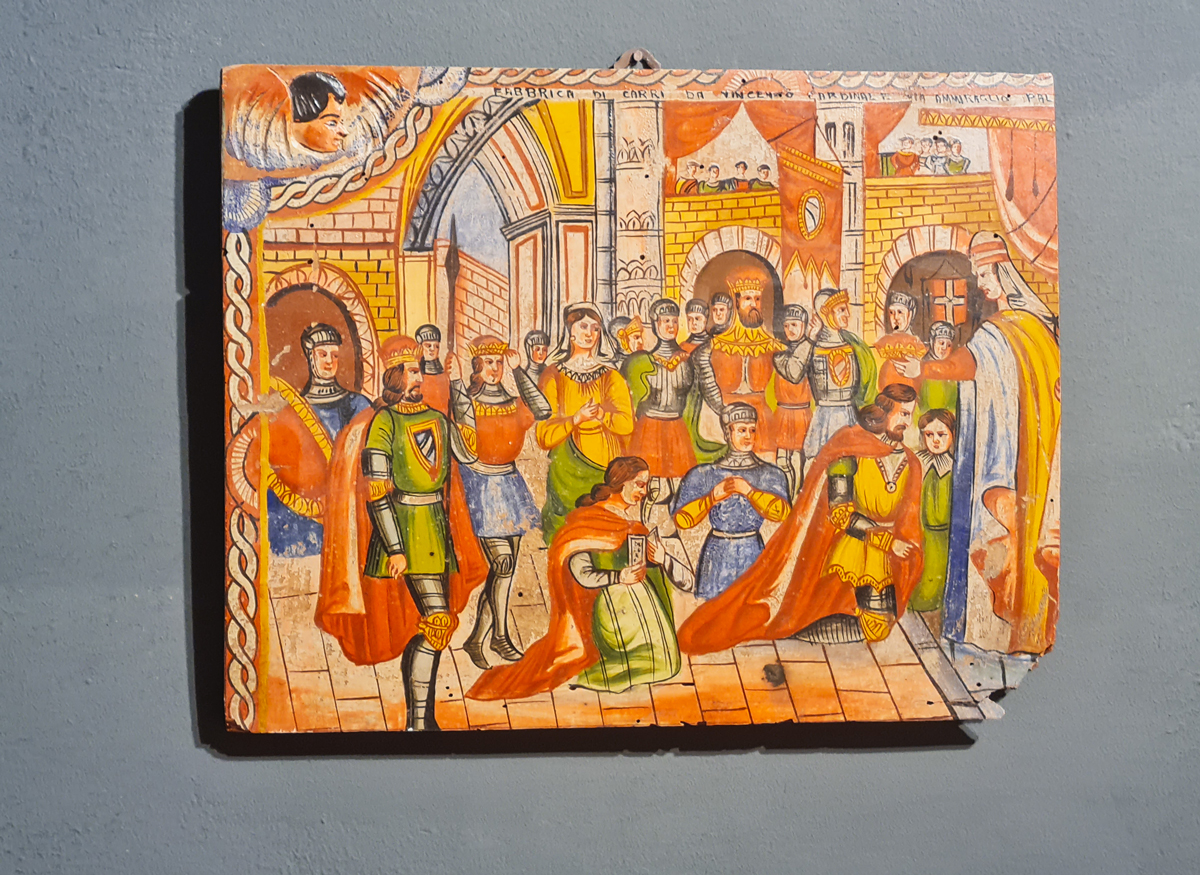
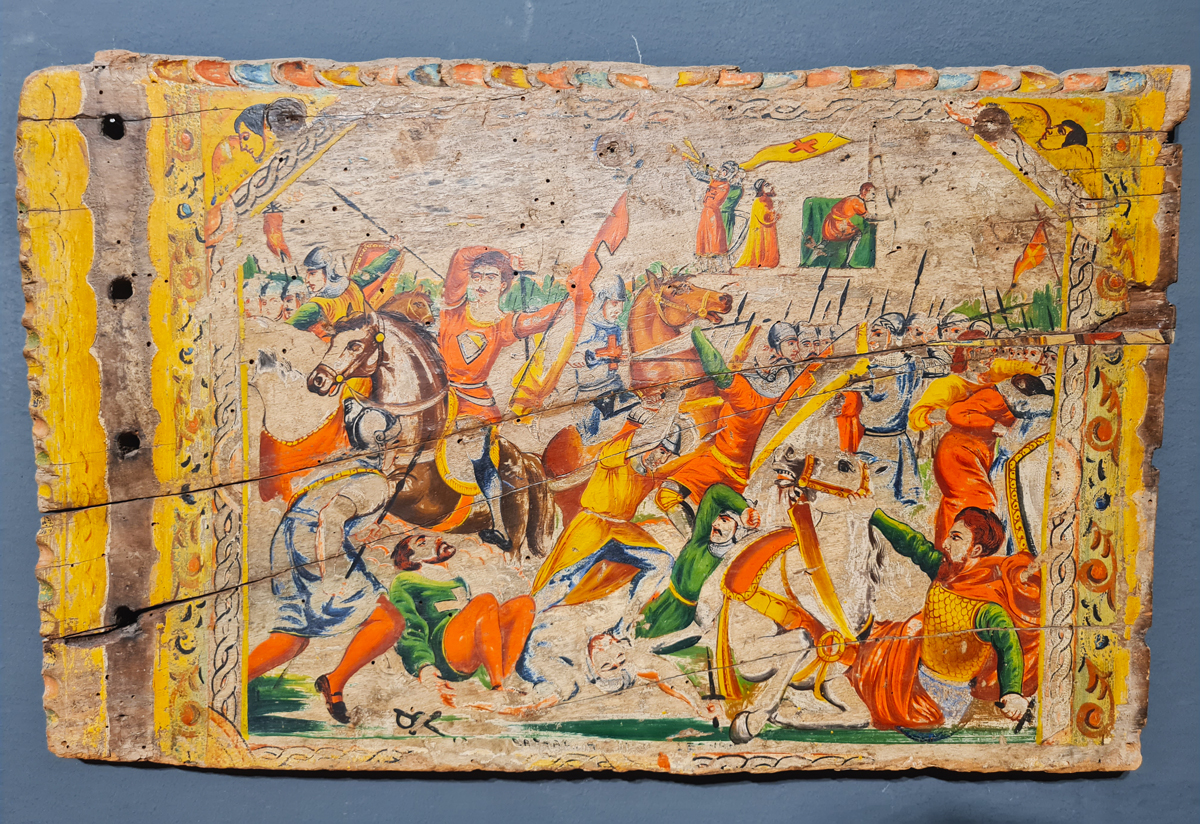
The collection on display consists of 120 artifacts for the most part is related to “pizzi”, including: 67 central spindle elements, 9 central key elements, 19 keys, 7 banks, 6 Catania elements, 1 wheel, 1 spindle, a frame (mock bank) depicting “The Battle of Admiral Bridge” copy of Guttuso’s painting, 4 spindles, 5 reuses.